
Kitchen Skills: Knife, Rice and Stock
Almost every recipe on this site leans on three skills: cutting onions without drama, cooking rice that stays separate, and making a pot of stock. Learn these once and every continent gets easier.
Each lesson takes minutes to read and a single dinner to practice.
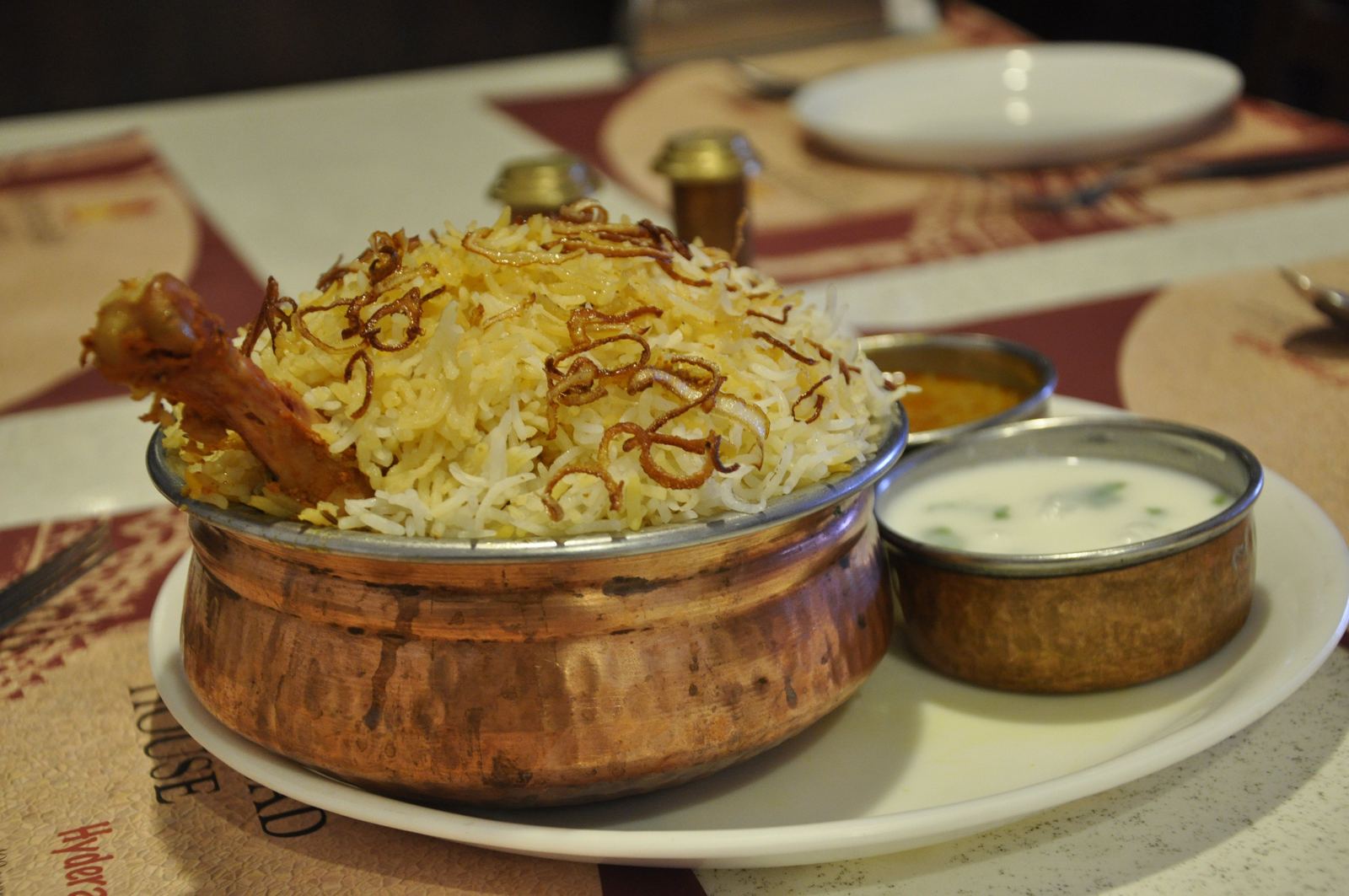
Hyderabadi chicken biryani: Dheerajk88, CC BY-SA 4.0
Lesson 1: Knife basics and dicing an onion
A sharp knife and a steady board are safer than a dull knife, because a sharp blade goes where you aim it instead of slipping.
- Steady the board Lay a damp paper towel or cloth under your cutting board so it cannot slide. Use a separate board for raw meat and for vegetables.
- Hold the knife Grip the handle with three fingers and pinch the base of the blade between thumb and the side of your index finger. This gives far more control than holding the handle alone.
- Make the claw Curl the fingertips of your other hand under, knuckles forward, and rest them on the food. The flat of the blade rides against your knuckles, so your fingertips stay out of the way.
- Halve and peel Cut the onion in half from root to tip. Peel off the skin and leave the root end on; it holds the layers together while you cut.
- Slice, then cross-cut Lay each half flat. Make thin cuts from the tip toward the root without cutting through it, then slice across those cuts to get a neat dice. Throw away the root end.
Tip: Wash the board and knife in hot, soapy water after raw meat, poultry or seafood, before you cut anything that will not be cooked.
Lesson 2: Fluffy long-grain rice by absorption
Rice for biryani, jollof-style dishes and stir-fries all start with the same idea: rinse away surface starch, then cook in just enough water to be absorbed.
- Rinse Put 1 cup (about 185 g) long-grain white rice in a bowl, cover with cold water, swirl and pour off. Repeat until the water is nearly clear.
- Measure the water Add the rice to a heavy pot with about 1 1/2 cups (360 ml) water and a good pinch of salt. Rice brands differ, so adjust next time if it turns out too firm or too soft.
- Boil, then cover Bring to a boil uncovered, then turn the heat to the lowest setting, cover tightly and cook 15 minutes without lifting the lid.
- Rest Turn off the heat and leave the lid on for 10 minutes. The steam finishes the grains evenly.
- Fluff Fluff gently with a fork, lifting from the bottom, and serve.
Tip: Cool leftover rice quickly in a shallow container and refrigerate it within 2 hours. Reheat until steaming hot, 165°F (74°C).
Lesson 3: A simple chicken stock
Stock is the quiet base of soups and stews from gumbo to ramen. This version uses leftover bones and takes a few hours of mostly hands-off simmering.
- Fill the pot Put the bones of one roast chicken (or about 2 lb / 900 g raw wings or backs) in a large pot with a halved onion, a carrot, a celery stalk, a bay leaf and a few peppercorns. Cover with cold water by about 2 inches (5 cm).
- Simmer gently Bring just to a boil, then lower the heat so only a few bubbles break the surface. Skim off foam during the first 20 minutes.
- Wait Simmer uncovered for 3 to 4 hours, topping up with hot water if the bones poke out. A hard boil makes cloudy, greasy stock.
- Strain Pour through a fine sieve into a clean bowl. Discard the solids. Leave salt out so you can season each dish later.
- Cool fast Divide the stock into shallow containers or chill the bowl in an ice-water bath, then refrigerate. USDA advises refrigerating cooked food within 2 hours, using it within 3 to 4 days, or freezing it for 3 to 4 months.
Tip: When you reheat stock or soup, bring it to a rolling boil, as USDA recommends for soups, sauces and gravies.
- FoodSafety.gov: 4 Steps to Food Safety
- USDA FSIS: Leftovers and Food Safety
- FoodSafety.gov: Cook to a Safe Minimum Internal Temperature
Facts on this page were checked against these sources (updated Oct 1, 2026). Spot an error? Email hello@fireempireshop.com.