
Brazilian Feijoada
Black beans, pork and Saturday lunch. Feijoada is Brazil's slow-simmered black bean and pork stew, a Saturday ritual with rice, farofa, greens and orange. Its history and a recipe.
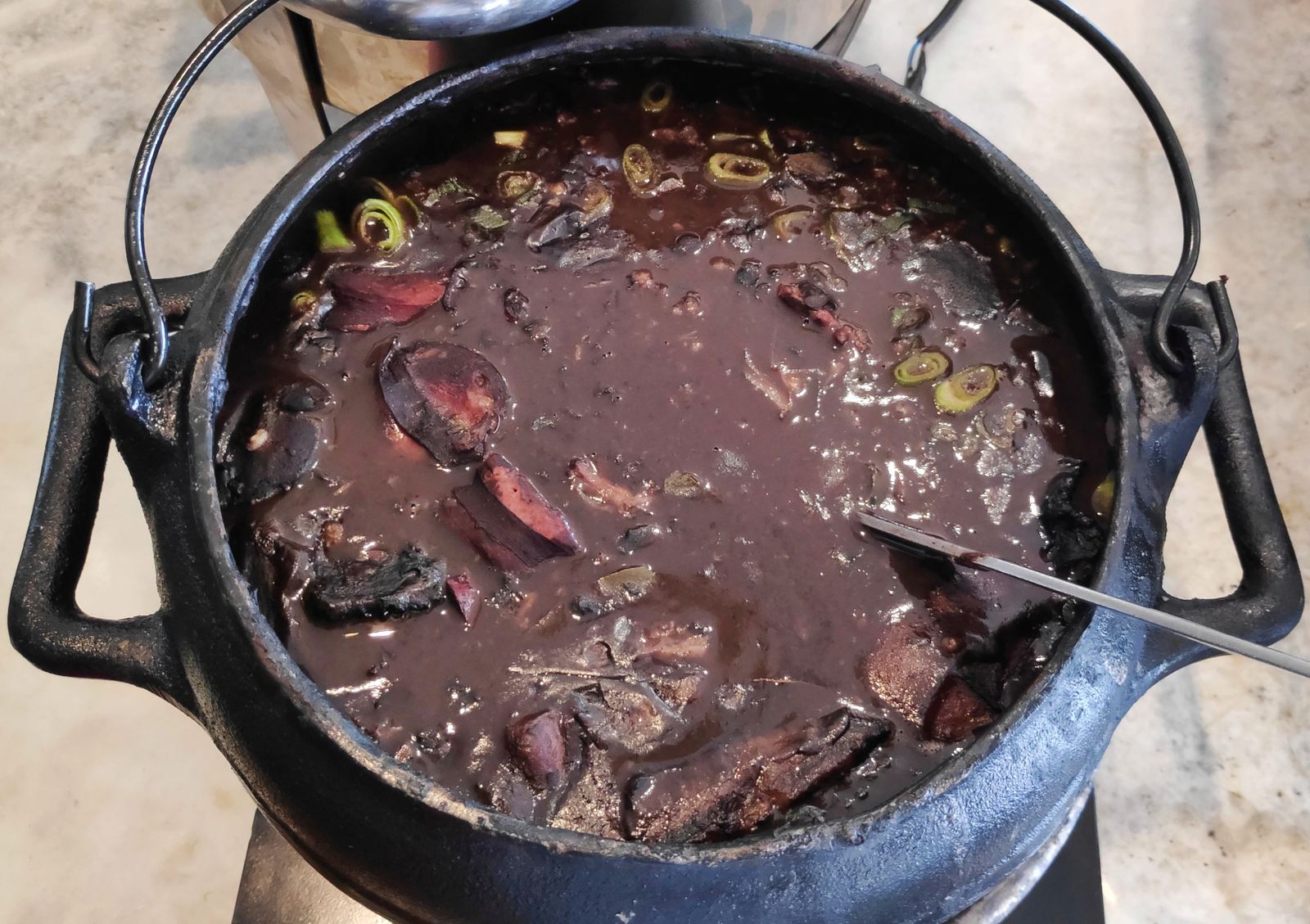
Feijoada in a clay pot: Melsj, CC BY-SA 4.0
A national comfort food
Feijoada is often called Brazil's national dish. Its name comes from feijão, bean, and at heart it is black beans slowly simmered with an assortment of pork and beef until the broth turns thick, dark and smoky. In Rio de Janeiro, feijoada is a Saturday institution: long, lazy lunches with family and friends, often with live samba, that stretch well into the afternoon.
Restaurants in Rio and São Paulo traditionally serve feijoada on Wednesdays and Saturdays, often as a buffet where diners pick their favorite cuts from separate pots. It is a slow meal by design. The beans and meats are rich and filling, so many Brazilians plan for a long rest afterward. The dish is also a fixture at parties and family gatherings, where a huge pot can feed a crowd for a whole afternoon.
Video: Brazilian Feijoada - Black Bean & Pork Stew Recipe (Food Wishes), embedded from YouTube.
Where it really comes from
A popular story says feijoada was invented by enslaved Africans using cuts discarded by their masters. Many food historians now doubt this. They point to the stews of Portugal, such as cozido and the bean stews of the north of the country, as the model, and note that cuts like ears and trotters were valued in Portuguese cooking. African and Indigenous influences clearly shaped Brazilian food, but feijoada as we know it took form in nineteenth-century Brazilian homes and restaurants, especially in Rio.
Light and full versions
A full feijoada completa can include salted pork ribs, smoked sausage, bacon, carne seca (salted dried beef), pork loin, and traditional extras like ears, tails and feet. Simpler home versions keep to sausage, ribs and bacon. In Bahia, a related dish uses red or brown beans, and Portugal has its own feijoada with white or red beans. Vegetarian feijoadas with smoked tofu or mushrooms are increasingly common.
How to serve it
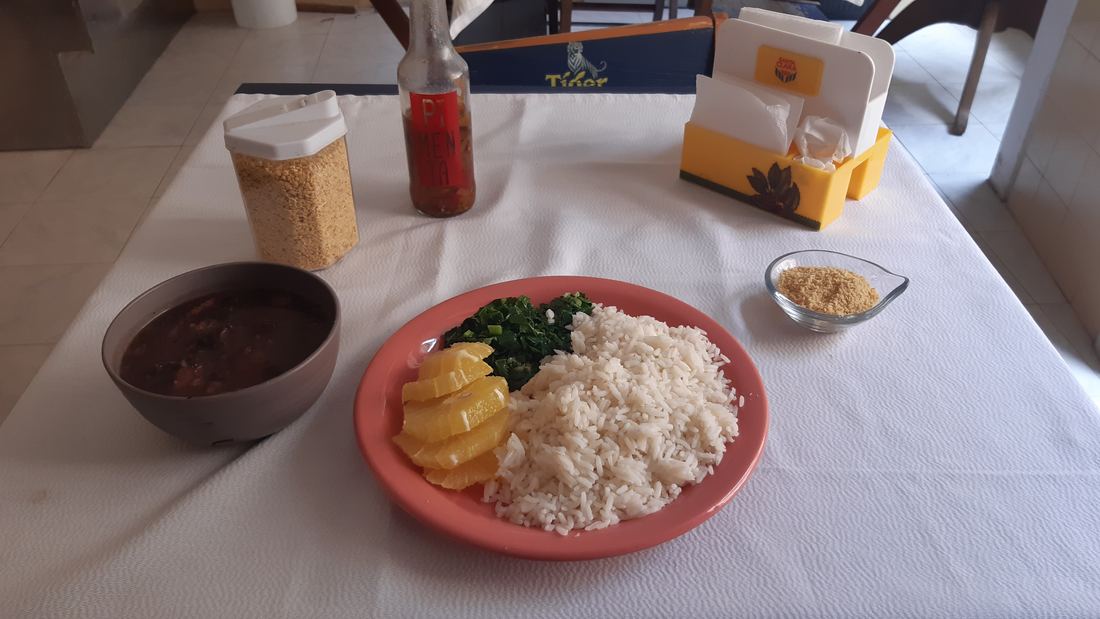
Serve the beans and meats with white rice, finely shredded collard greens sautéed in garlic, farofa (manioc flour toasted in butter with onion and bacon), and slices of orange, which brighten the rich stew. A caipirinha is the classic drink.
Many cooks prepare the beans a day ahead, because like most stews feijoada improves overnight. Leftovers often become tutu, a thick bean purée mixed with manioc flour, or a hearty soup the next day.
Make Brazilian Feijoada at home
Ingredients
- 1 lb (450 g) dried black beans, soaked overnight
- 8 oz (225 g) carne seca or corned beef, soaked to remove salt (optional)
- 1 lb (450 g) pork spare ribs, cut into single ribs
- 8 oz (225 g) thick-cut bacon or slab bacon, diced
- 12 oz (340 g) smoked sausage such as linguiça, sliced
- 1 lb (450 g) pork shoulder, cubed
- 2 onions, chopped, and 6 garlic cloves, minced
- 3 bay leaves
- Salt and black pepper
- To serve: white rice, sautéed collard greens, farofa, orange slices, hot sauce
Method
- If using carne seca, soak it overnight in several changes of water, then cut into chunks.
- Drain the beans and put them in a large pot with the bay leaves, the carne seca and 3 quarts (2.8 liters) of water. Simmer 1 hour.
- Meanwhile, brown the bacon in a skillet until crisp. Remove, then brown the ribs, pork shoulder and sausage in batches in the bacon fat. Add all the meats to the beans.
- In the same skillet, cook the onions until golden, add the garlic for 1 minute, then stir a ladle of beans into the pan and mash them. Return this to the pot.
- Simmer 1 1/2 to 2 hours more, uncovered, stirring often, until the beans are creamy and the meats are tender. Add water if it gets too thick.
- Season with salt and pepper. Serve with rice, greens, farofa and orange slices.
- Wikipedia: Feijoada (Brazilian dish)
- Southern Cultures: Feijoada and Hoppin' John
- Taste of Lisboa: Is feijoada Brazilian or Portuguese?
Facts on this page were checked against these sources.
- Feijoada in a clay pot: Melsj, CC BY-SA 4.0
- Feijoada served in São Luís: Ridiculopathy, CC0
Text written by Intercontinental Chef.





,_S%C3%A3o_Lu%C3%ADs,_Maranh%C3%A3o.jpg)