
Peruvian Ceviche
Fresh fish, lime and tiger's milk. Ceviche is Peru's national dish: raw fish cured in lime with chile, onion and cilantro. Its history, leche de tigre, sides and a home recipe.
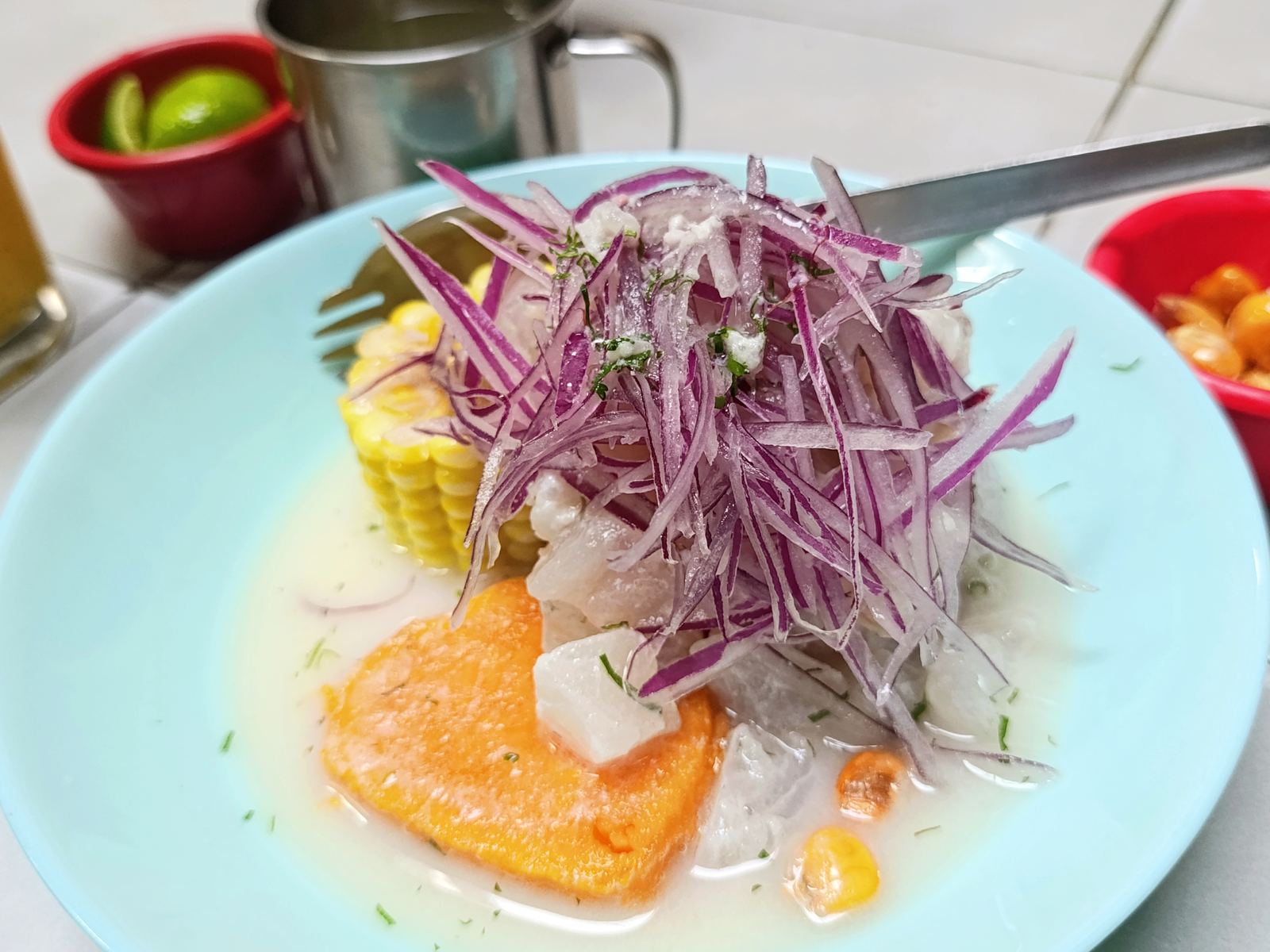
Ceviche with sweet potato and corn: Juan Carlos Fonseca Mata, CC BY-SA 4.0
Peru's pride on a plate
Few countries love a dish as fiercely as Peru loves ceviche. It is declared part of the national cultural heritage, celebrated with its own national day in June, and in 2023 UNESCO added the practices around Peruvian ceviche to its list of the intangible cultural heritage of humanity.
Coastal peoples of ancient Peru ate fish preserved with salt, chiles and acidic fruit juices long before Europeans arrived. The Spanish brought limes and onions, which became essential, and the dish took its modern form in the cevicherias of Lima and the coast.
Video: Peru: Anthony Bourdain gets a lesson in ceviche (Parts Unknown) (CNN), embedded from YouTube.
The Japanese touch
Older Peruvian ceviches were often marinated for hours. Japanese immigrants began arriving in 1899, and from around the 1970s Nikkei chefs, Peruvians of Japanese descent used to eating very fresh raw fish, popularized marinating for only a few minutes, so the outside turns opaque while the center stays tender and almost raw. Today most Peruvian chefs make ceviche to order and serve it within minutes.
Tiger's milk
The cloudy, tangy juice left in the bowl is leche de tigre, tiger's milk. It is made of lime juice, fish juices, chile, garlic, ginger and salt, sometimes blended with a few pieces of fish for body. Peruvians also drink it on its own from a small glass, often with a few pieces of fish or seafood.
How to serve it
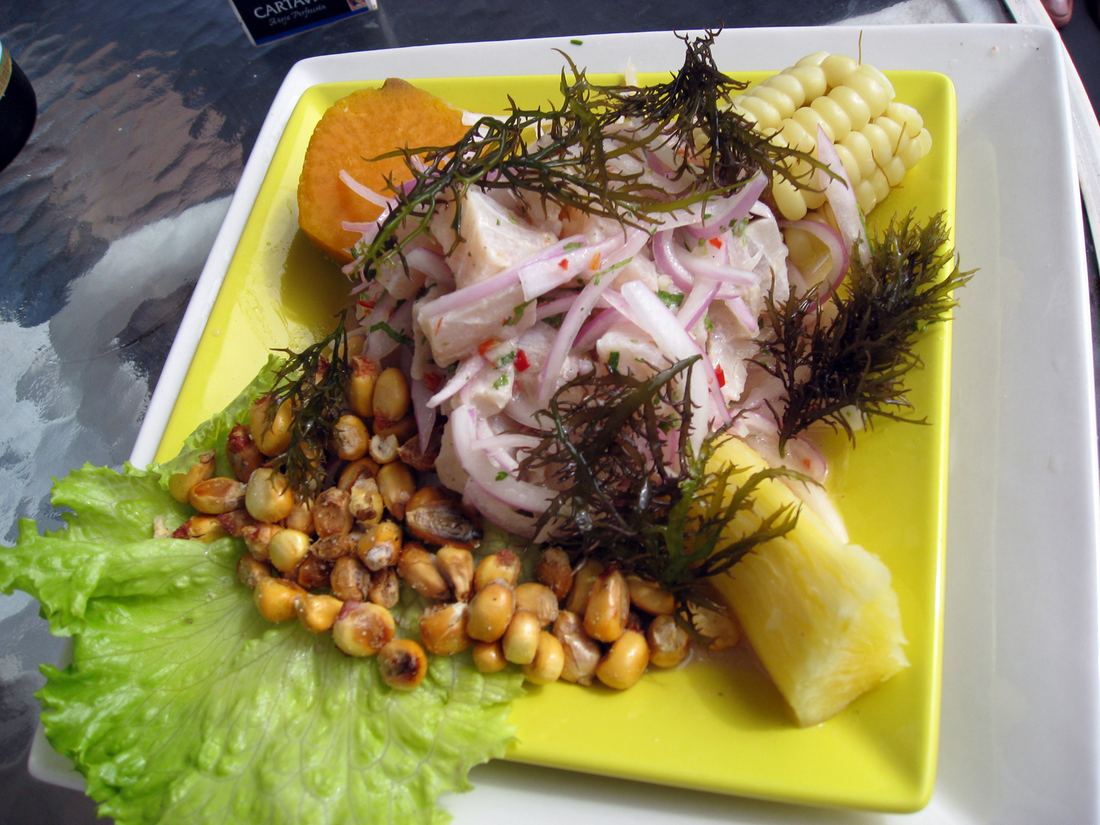
Ceviche is a lunchtime dish in Peru; many cevicherias close by late afternoon because the fish should be that morning's catch. It comes with slices of boiled sweet potato, whose sweetness softens the acid, chunks of large-kernel Andean corn called choclo, and crunchy toasted corn called cancha. A cold beer or a pisco sour is the usual drink.
Peru's cold Humboldt Current makes its Pacific waters among the richest fishing grounds on earth, which is why fresh fish is so central to coastal cooking. Classic ceviche uses firm white fish such as sole, corvina or sea bass, but versions with shrimp, octopus, scallops and mixed shellfish, called ceviche mixto, are just as common. In the Amazon, cooks make ceviche from river fish, and in the Andes a vegetarian version with mushrooms or Andean grains is gaining fans. Some cevicherias also serve a spicy, deep-fried fish called chicharrón de pescado alongside.
Make Peruvian Ceviche at home
Ingredients
- 1 lb (450 g) very fresh skinless white fish, such as sea bass, flounder or halibut, sold as sushi-grade or previously frozen for raw eating
- 1 small red onion, sliced paper thin
- 1 ají limo or 1/2 habanero, seeded and very finely chopped (or ají amarillo paste)
- 1 garlic clove, grated, and 1/2 tsp grated ginger
- 3/4 cup freshly squeezed lime juice (180 ml), from about 12 limes
- 2 tbsp chopped cilantro
- 1 1/2 tsp flaky salt
- 2 ice cubes
- To serve: 1 sweet potato boiled and sliced, 1 ear corn boiled and cut in rounds, lettuce leaves, toasted corn kernels
Method
- Buy fish your fishmonger sells for raw eating, either sushi-grade or previously frozen to kill parasites, and keep it cold until the moment you use it. Lime juice changes the texture of fish but does not cook it the way heat does.
- Soak the sliced onion in ice water for 10 minutes to soften its bite, then drain well.
- Cut the fish into 3/4 inch (2 cm) cubes. Keep it very cold.
- Put the fish in a chilled glass or ceramic bowl. Add the salt, garlic, ginger and chile, and mix gently.
- Squeeze the limes by hand, gently, without pressing too hard (over-squeezing makes the juice bitter). Pour over the fish, add the ice cubes and stir for 1 to 2 minutes.
- Let it sit 2 to 5 minutes, just until the fish turns opaque on the outside. Remove the ice.
- Fold in the onion and cilantro, taste and adjust salt or chile.
- Spoon onto plates over lettuce with sweet potato and corn alongside. Pour a little leche de tigre over each portion and serve immediately.
- UNESCO Intangible Cultural Heritage: Peru
- Wikipedia: Peruvian ceviche
- Journal of Ethnic Foods: Peruvian ceviche, cultural heritage of humanity
- NCCEH: Microbial Risks and Canadian Regulations for Ceviche
Facts on this page were checked against these sources.
- Ceviche with sweet potato and corn: Juan Carlos Fonseca Mata, CC BY-SA 4.0
- Ceviche in La Punta, Callao: Jorge G. Mori, Public domain
Text written by Intercontinental Chef.





.jpg)