Louisiana Gumbo
Roux, okra and a melting pot. Gumbo blends West African, French, Spanish and Native American cooking into Louisiana's signature stew. Creole versus Cajun, plus a recipe.
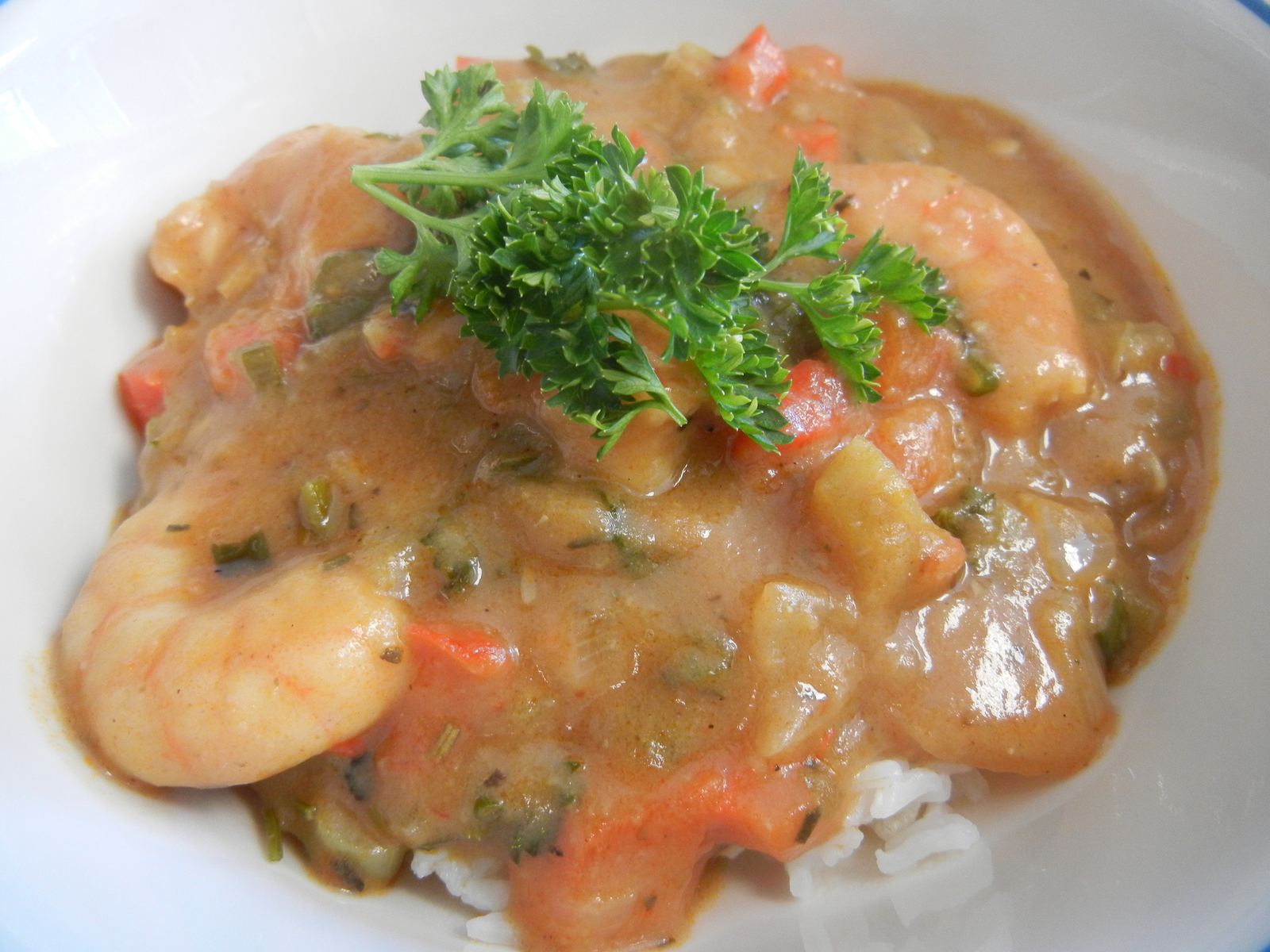
Shrimp gumbo: Kate, CC BY 2.0
A pot full of history
Gumbo was born in eighteenth-century Louisiana, and its ingredients tell the story of the people who lived there. The name most likely comes from a West African word for okra, a vegetable carried across the Atlantic during the slave trade, and enslaved African cooks shaped the dish. French settlers brought roux, flour cooked in fat. Spanish colonial rule brought new settlers, including Canary Islanders, and a taste for peppers and spice, and the Choctaw people contributed filé, ground dried sassafras leaves.
Written accounts describe gumbo by 1802, a printed recipe appeared in 1824, and in 2004 the Louisiana legislature made gumbo the official state cuisine.
Video: Gumbo 101 with Chef Leah Chase (NOURISH), embedded from YouTube.
Three ways to thicken
Most gumbos start with a roux cooked slowly, sometimes for close to an hour, until it is the color of peanut butter or dark chocolate. The darker it gets, the nuttier the flavor, though a dark roux thickens less. Okra adds body and a silky texture, and filé is stirred in off the heat at the end or at the table. Cooks argue happily about whether okra and filé should ever share a pot.
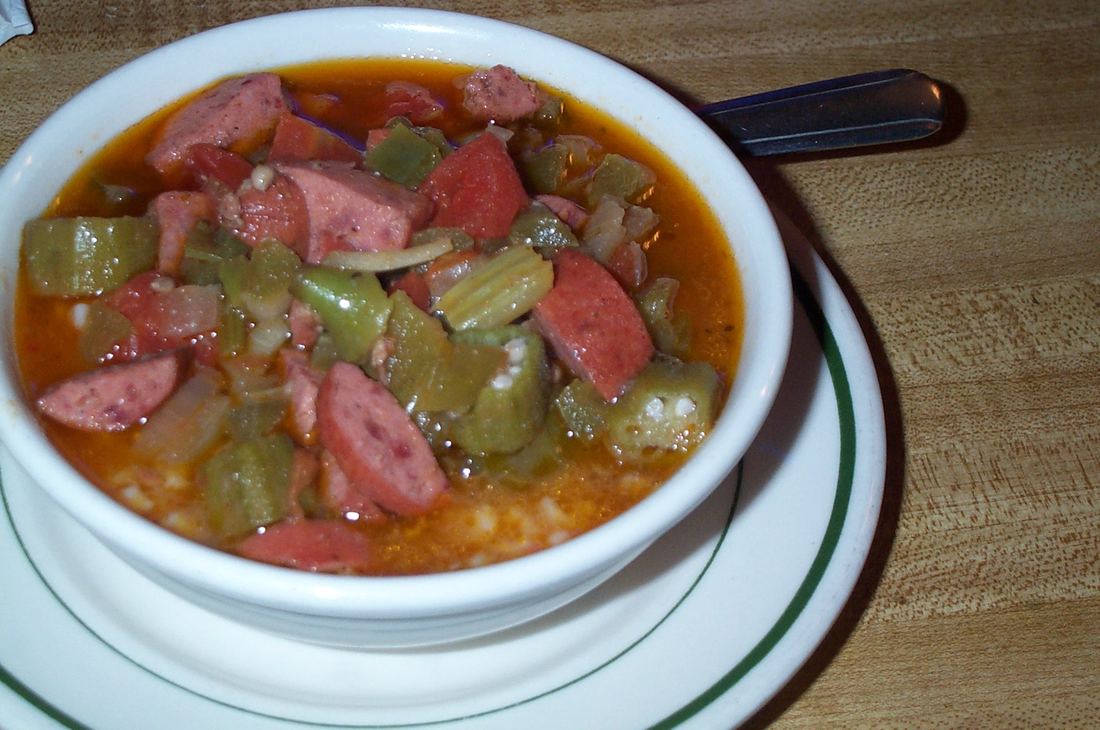
Nearly every gumbo starts with the holy trinity of Louisiana cooking: chopped onion, celery and green bell pepper, a local cousin of the French mirepoix. They go into the hot roux, which stops it from darkening further and releases a wonderful toasted aroma. From there, the pot can hold almost anything: chicken, smoked sausage, duck, shrimp, crab, oysters or even turkey after Thanksgiving. Gumbo is typically cooked for a long time, which lets all these flavors blend.
Creole and Cajun
Creole gumbo, associated with New Orleans, often includes tomatoes and is frequently built on seafood: shrimp, crab and oysters. Cajun gumbo, from the rural southwest of the state, usually skips tomatoes and leans on a very dark roux with chicken and smoked andouille sausage, or duck and other game. Gumbo z'herbes, a green gumbo made from many kinds of greens, is a Holy Thursday tradition made famous by the late New Orleans chef Leah Chase.
How to serve it
Gumbo is a soup-like stew ladled over a scoop of white rice. Bottles of hot sauce and filé sit on the table. In parts of Cajun country, a spoonful of potato salad goes right into the bowl. It always tastes better the next day, which is why many families make a giant pot.
Make Louisiana Gumbo at home
Ingredients
- 3/4 cup neutral oil (180 ml)
- 3/4 cup all-purpose flour (95 g)
- 1 large onion, 2 celery stalks and 1 green bell pepper, all diced
- 4 garlic cloves, minced
- 1 lb (450 g) smoked andouille sausage, sliced into rounds
- 2 lb (900 g) boneless chicken thighs, cut in large chunks
- 8 cups chicken stock (1.9 liters)
- 2 bay leaves, 1 tsp dried thyme
- 1 to 2 tsp Cajun seasoning, plus cayenne to taste
- 1 cup sliced okra (about 120 g), fresh or frozen (optional)
- Sliced green onions and parsley
- Filé powder and hot sauce, to serve
- Cooked long-grain white rice
Method
- Brown the sausage in a large heavy pot, then the chicken seasoned with Cajun seasoning. Set both aside.
- Add the oil to the pot and whisk in the flour. Cook over medium-low heat, stirring constantly with a flat wooden spoon, for 30 to 45 minutes until the roux is a deep chocolate brown. If you see black specks, it has burned: start again.
- Add the onion, celery and bell pepper. The roux will sizzle and darken further. Cook 8 minutes until soft, then add the garlic for 1 minute.
- Gradually whisk in the stock until smooth. Add the bay leaves, thyme, chicken and sausage.
- Simmer uncovered for 1 hour, skimming fat from the surface. Add the okra for the last 20 minutes if using.
- Season with salt and cayenne, and stir in the green onions and parsley.
- Serve over rice with filé and hot sauce at the table.
- Wikipedia: Gumbo
- Louisiana State Legislature: R.S. 49:170.12, State cuisine
- Axios New Orleans: Dooky Chase gumbo z'herbes on Holy Thursday
- National Geographic: Deconstructing gumbo, Louisiana's beloved state dish
Facts on this page were checked against these sources.
- Shrimp gumbo: Kate, CC BY 2.0
- Sausage and okra gumbo: stu_spivack, CC BY-SA 2.0
Text written by Intercontinental Chef.